
The one thing Formula 1 can learn from American sports
 Originally published by Motorsport.com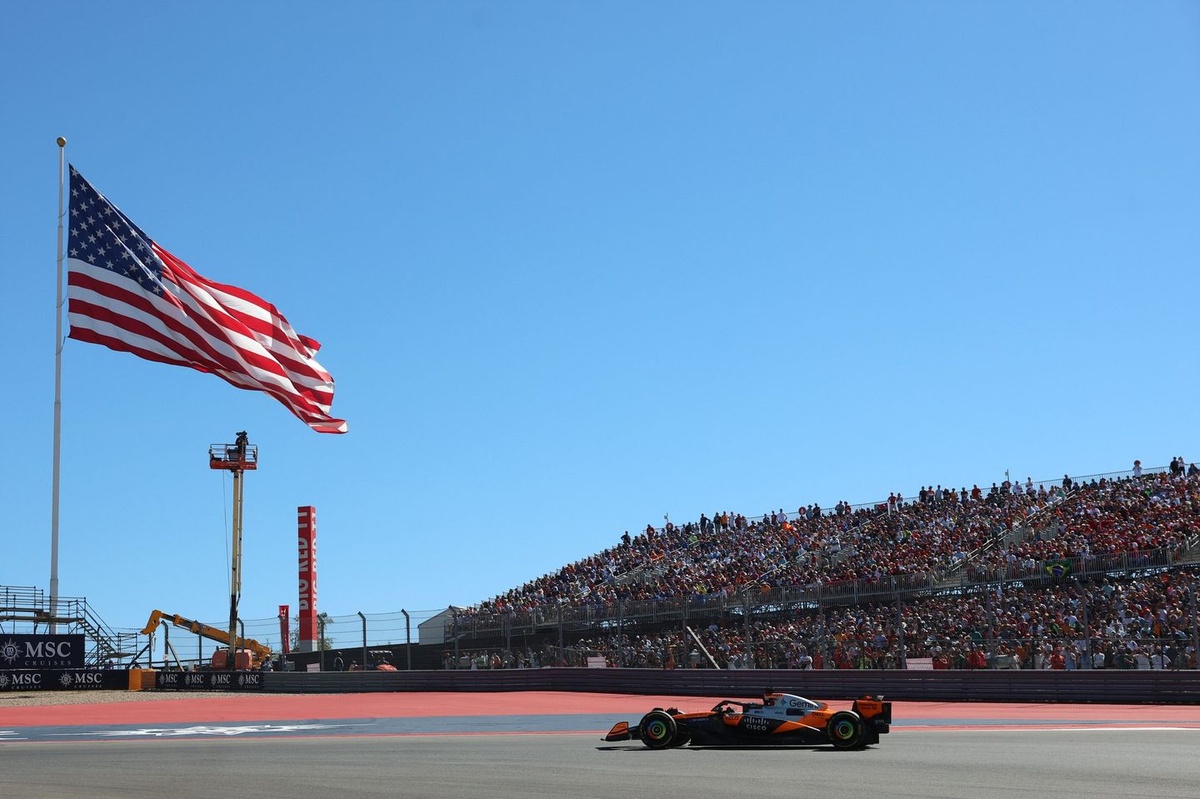
Formula 1 has undergone rapid development in recent years, especially commercially. The global fanbase has grown significantly, with the series reaching new audiences.
The share of younger and female fans has increased – also at the tracks, as reflected in the attendance figures – and the same applies to F1’s appeal in the United States.
Part of this is linked to the sporting side – although that has raised questions from diehard fans about how far F1 should lean into its commercial expansion – while on the other hand, steps have been taken to open up the series and attract audiences on platforms that are new to F1. The Netflix series Drive to Survive and F1: The Movie are the most significant examples of that.
Such steps require a commercial vision that is shared across the paddock, but this is where F1 still sees room for improvement.
In an exclusive interview with Motorsport.com, F1 CEO Stefano Domenicali explains that the pinnacle of motorsport can learn a lot from American sports leagues such as the NFL and NBA.
“What we need to take away from the team discussion is their, let's say, tactical discussion where they feel that they have an advantage. There are a lot of things that we'll never copy from American sports, but there is one element where I do believe that we should learn – because in the US, there is the owners meeting when the owners talk about business,” Domenicali said.
“Business is related to how much money you can do together and what is the right regulation that you can have for the best of your interest. On that, we are on the right path, but still not there.
“We need to do a step as a system where everyone understands that on the track you have to fight. You can steal one engineer from the others, or the drivers. But when you are together and you think with a vision of the sport [in mind], you should be on the same page.”

Watch: Autosport's Exclusive Interview with F1 CEO Stefano Domenicali
Domenicali stresses that progress has been made, as teams have felt the commercial impact of Drive to Survive and F1: The Movie themselves, both in terms of reach and sponsorship deals.
“We shouldn't be any different when talking about the growth of what we're doing. It's like what has happened a couple of years ago when at the beginning, without naming them, some teams didn't want to do commercial projects like Netflix or other things that I don't want to remember.
“But don't be selfish. Think if there is a project that is giving a big, positive effect to everyone, let's dive into it. And the good thing, let's say, an incredible understanding of that was when I presented the movie. The movie has been a huge success to increase the awareness of our sport in places where no one knew about us.”
Two key differences with the American model
The explanation for why the commercial reality is more complex in the F1 paddock than in most American sports is twofold. First, it has to do with the ownership structure of the teams and the fact that team principals are usually involved in most of the discussions.
They – understandably given their role – primarily think about the sporting side of things rather than the commercial aspects that Domenicali is referring to.
“What I'm saying is that the owners in Formula 1 are different and differentiated. In American sports, there is one guy that is owning one team. And therefore, if you meet with all the owners of the NFL, you have one person and they know that it's their business,” the F1 CEO said.
“We are in a sort of situation – and I say that with respect, don't misunderstand me, it's not a criticism, but it's a factual thing – that the vast majority of our team principals are not the owner. So they may correctly have their interests on a topic that is sometimes not related to what could be good for the business.
“Therefore, we need to grow together in understanding that the more you're involved at the business level, the more you need to think and sometimes you need to take away your cap of the interest of the team.”

Most F1 team principals are not owners
Photo by: Mark Sutton / Formula 1 via Getty Images
Besides ownership, it is a matter of mindset, which according to Domenicali can best be summarised by the adage ‘league Sunday, business Monday’. On track, the battle must be fierce, but away from it the bigger picture must be considered.
“It's a mindset. And it's not easy because we are racers. I say ‘we’ because I come from that as well, so I say that we are racers. It's a matter of being always on the performance side of it. That is great, but there are certain moments when we need to have a vision.”
In F1, however, this is complicated on multiple fronts. It becomes evident not only with major topics such as opening up to a Netflix series, but also with smaller matters like a TPC test – where competitors are quick to point to a potential competitive advantage.
More importantly, F1 and the FIA must always weigh commercial interests against the DNA of the sport, ensuring it does not alienate more old-school fans while continuing to attract a new and younger fanbase – something that remains a crucial balancing act and has come to the forefront this year under the new technical regulations.
We want your opinion!
What would you like to see on Motorsport.com?
- The Motorsport.com Team