
How F1's 'worst' team leapt into an unusual position
 Originally published by The Race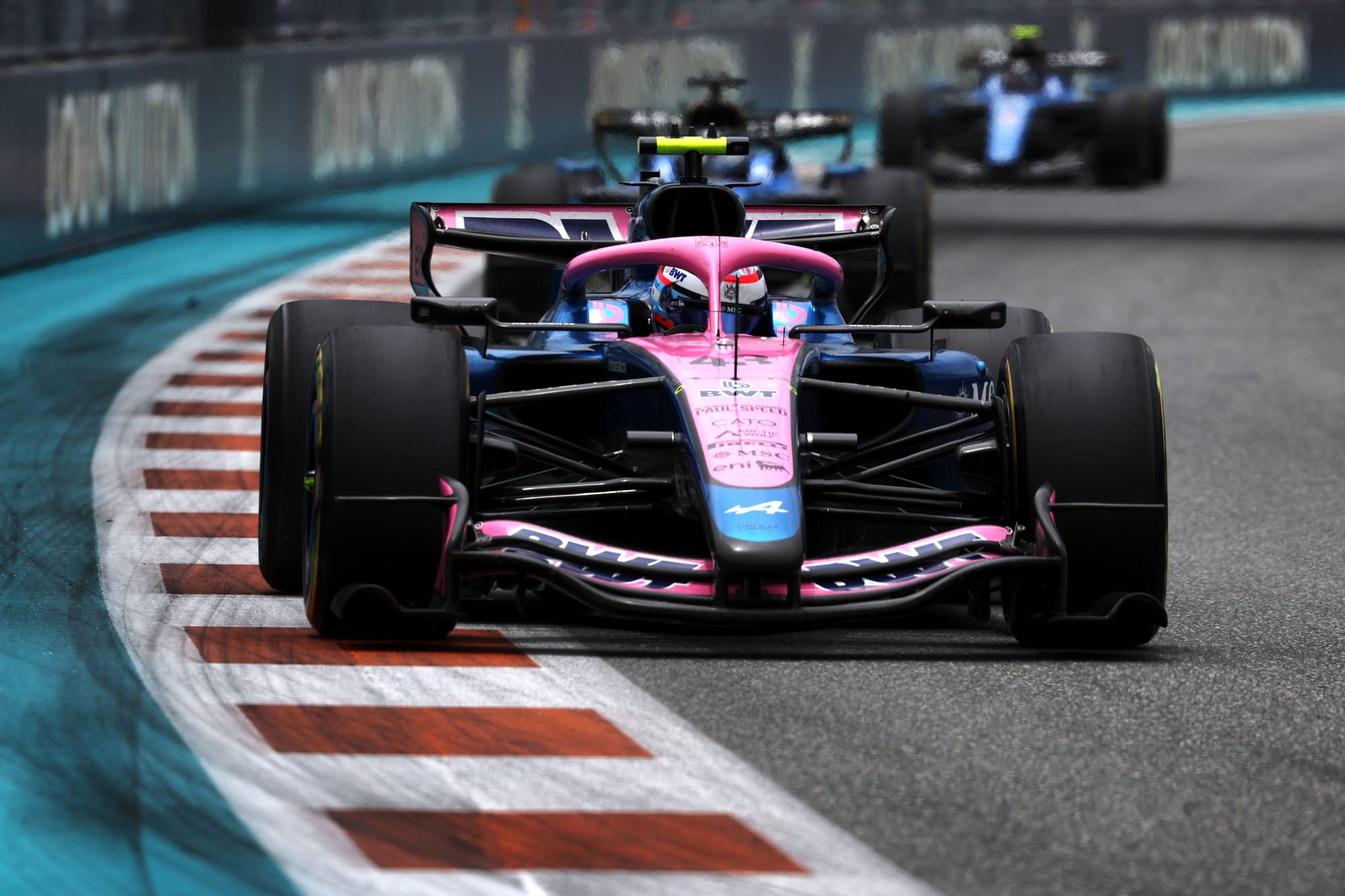
The worst team in Formula 1 last season has made such a massive leap forward this year it is now in an unusual position caught between F1's typical class divide.
Looking at qualifying averages for the four races so far, F1's rules overhaul has clearly split the grid between the already-established 'Big Four' - Mercedes, Ferrari, McLaren and Red Bull - and an Alpine-headed midfield, with a small third class of two (Cadillac and Aston Martin) at the back for now.
Remove Australia, though, and the last three races have established the very clear trend that Alpine's not part of the midfield group at all. It’s in its own no-man's land between the top four teams and the would-be point scorers.
Armed with upgrades, the most recent race in Miami was Alpine’s most convincing of the season in terms of advantage over its most likely rivals from behind - and in how it had both cars clearly in the mix, with Franco Colapinto enjoying easily his best weekend for the Renault-owned team.
Though this was a particularly convincing performance, it was not a one-off. The signs were already there in Japan, where Pierre Gasly beat both underperforming Red Bulls and was 18 seconds clear of the next conventional midfield team, Racing Bulls.
Colapinto's 22-second margin over the two Williams cars in Miami compounded this - while Gasly being 26s ahead of next-best Haas in just 19 laps in that weekend’s sprint race was even more remarkable.
This is a colossal turnaround in fortunes since Alpine finished 2025 last in the championship, a result that was all but set in stone early in the year as it turned full attention to the new 2026 rules and its switch from being a works Renault team to a Mercedes customer.
That massive gamble - writing off an entire season, and forfeiting works team status - had a 'triumph or disaster' air to it. Having already amassed one more point across four weekends than it managed in 24 across the entirety of 2025, Alpine’s 2026 has been much more successful.
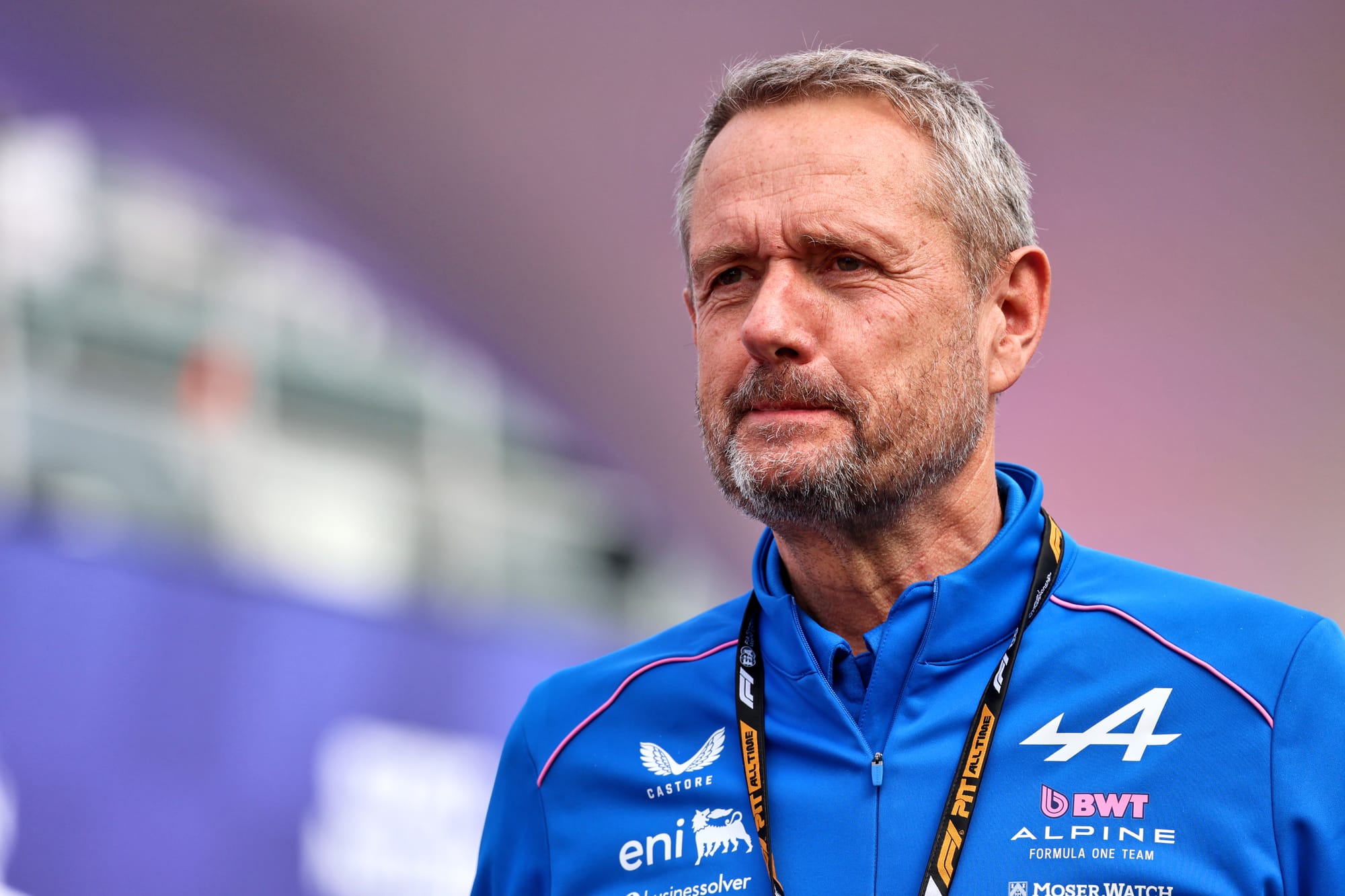
"It's a clear step," says managing director Steve Nielsen (pictured below). "We had a very good Bahrain test. We were confident coming out of Bahrain.
"Then we went to Australia and were a bit, 'Oh, maybe we've made a car that's only quick on one circuit'. So it was nice to then do these few races and where we show that we've made a step.
"And it helps everybody in the factory, everybody in the team, sponsors. Everybody involved in the effort is of course buoyed by increased performance.
"It all starts with the car. The car starts improving, people believe in the projects. Everything starts to get a bit easier. Better people want to come."
A slightly shaky season opener in Australia, and the fact the two leading Mercedes teams are clearly a big step ahead, are the reality checks that show how much can still be improved.
Nielsen says that the "absolute fastest car" - still Mercedes - and "the other Mercedes-powered teams" are Alpine's primary references at the moment. That allows it to be judged against where it wants to be, and where its hardware allows it to be.
Mercedes and McLaren being the early benchmarks therefore give it a clear target to aim for.
"If we'd been the last of those [Mercedes teams], clearly we wouldn't have done a very good job," said Nielsen.
"We're not at the moment. I don't know if that's because we've done a good job or others have done a worse job, but I'll take it."
What Nielsen alludes to is the ignominy of being the worst team with the (apparent) best engine, and risking throwing away a whole season for no real reward, and that team is clearly Williams.
By that comparison, Alpine has had a marvellous start to 2026.
It has not married its engine to a world-class chassis, clearly, but it has certainly thrived by unleashing more of Team Enstone's full potential on the new regs alongside going with a proven engine supplier rather than failing to live up to the theoretically higher potentially conferred by building its own engine.
And for a team that switched to Mercedes late and is surely far from optimising that relationship, realistically this is as good as it could be.
It's worth remembering that Alpine is still rebuilding: the David Sanchez-led technical team is evolving all the time and tools like a brand new simulator, installed last year by Dynisma, have much more of a role to play.
Progress will not be linear though. Alpine made good use of F1's April break to add a lighter chassis for Colapinto and a rear wing upgrade for Gasly to its Miami package - the rear wing arriving in luggage on Wednesday in Miami before being assembled in the garage.
That will be on both cars in Canada but some of its rivals fell further behind because they opted to wait a little longer on their first major developments of 2026.
"The other teams brought a bit less," says Nielsen. "Audi perhaps dropped back a bit compared to us, same for Racing Bulls and so on. But they'll bring upgrades in Canada or whatever.
"So it's going to be like this all year. I'm under no illusions that what we see [in Miami] may not be what we see in Canada, may not be what we see in Barcelona or Monaco."
The tantalising question the team probably can't get caught up in wondering, though, is…what if it is what is seen at those races?
Enstone showed back in 2022 that it was capable of developing really nicely through the first year of a new set of rules.
That was the last time it emerged as best of the rest - beating McLaren in a development war in the process! - before the usual Renault cycle of underachievement kicked in and it gradually regressed in the midfield.
Might this version of Alpine finally hold its ground, though? Might it be entitled to dream that it's possible? Even in Japan, Gasly was talking in terms of a mentality shift that, actually, that race and the Miami weekend backed up as entirely legitimate.
"Obviously I can sense more potential," he said. "What's difficult in Formula 1 is to be satisfied with being in the midfield or being on top of the midfield, because you always see someone else getting more and you want to join the fight.
"So ultimately I always carry that with me. It doesn't mean that I'm not appreciating all the work that has been done. We have two options: looking at how close the competition is behind and making sure that we remain on top of the midfield, which in itself is not easy because we saw Haas is a fierce competitor, VCARB [Racing Bulls] has been strong at times, but I'm more interested in the fight ahead.
"If I look at it, Red Bull were definitely raceable in China. In Australia there was a bit more of a gap, but even McLaren on pure pace in China wasn't too far ahead.
"That's why for me, as a team, I just want us to make sure that we focus on the right target, which is to try to jump on the forward train and try to slowly close the gap to these guys to be able to show our nose on some occasions this year."
In other words: don't look at how close the midfield teams are behind, look at the gap ahead.
At its best, Alpine this year is closer to the next team ahead than its typical rivals behind. That will probably change given Red Bull’s apparent transformation with its own Miami upgrade overhaul, and McLaren's surge into a race win contender. But that's the bar Gasly wants Alpine to be measured against and…why not?
The novelty of not being last has worn off. The novelty of scoring points has worn off. Alpine needs to set and achieve the next target now.
If it can avoid being pulled back into 'Class B' and really has a season in which it annexes the final two spots in Q3 and the points behind 'Class A' more often than not, that will be a huge achievement.
Gasly said: "Personally I want to get closer to these frontrunners." On the evidence of 2026 that can be more than just a run-of-the-mill target from F1's midfield leader - but whether it is achieved will be a big test of whether this version of Alpine is truly any different to its predecessors.