
What Formula E makes of F1's 2027 shift + why it's using it for promo
 Originally published by The Race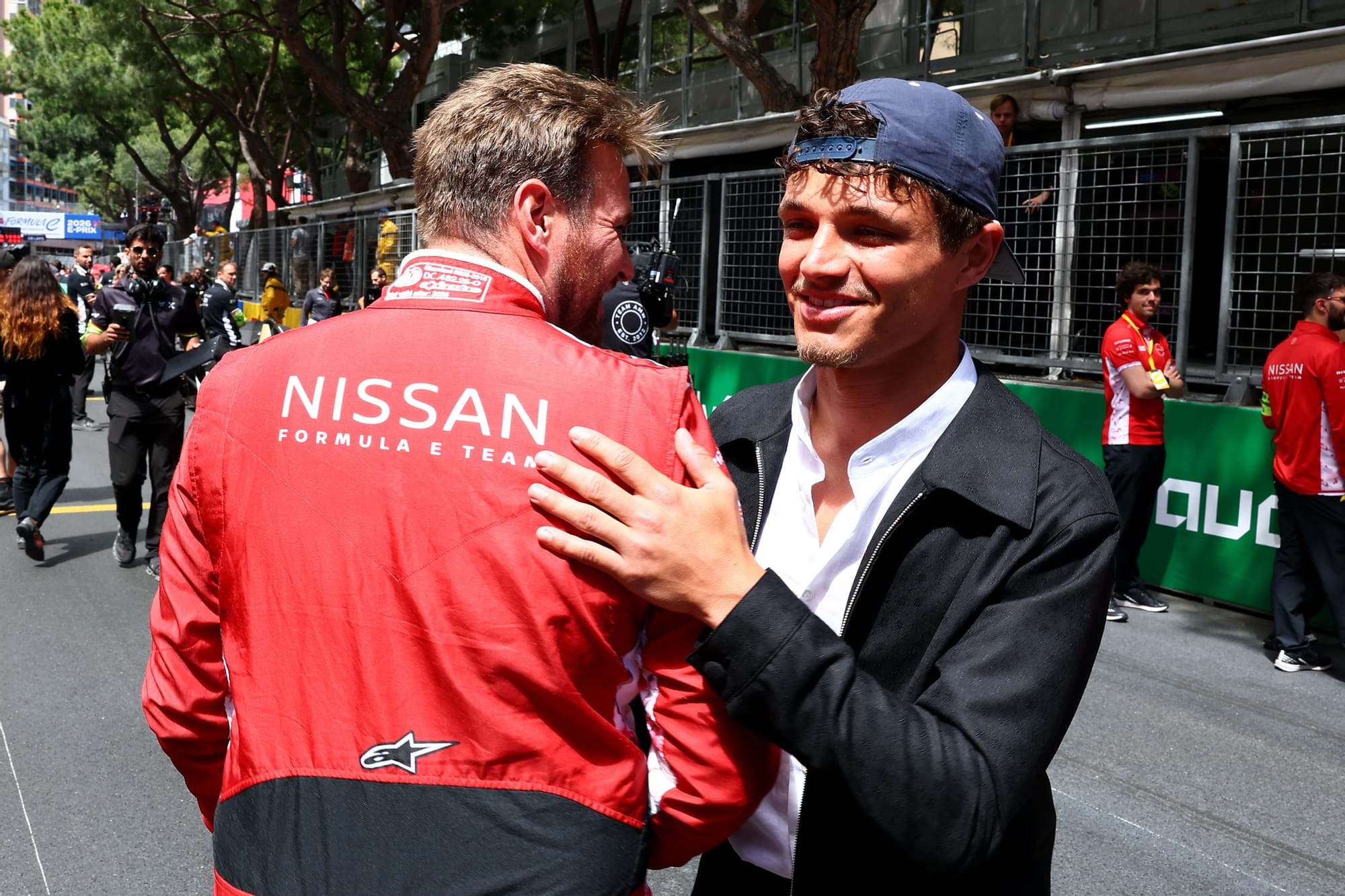
When I looked around the pitlane at Paul Ricard last month as Liberty Global CEO, Mike Fries addressed the assembled dignitaries, Formula E team principals, drivers and a handful of media, there were several comedic mouths agape at what he said.
"I have a message to my cousins at Formula 1," Fries said, addressing Liberty Media Corporation, the owner of F1.
"Basically, halfway doesn't make history," he added, clearly referencing the notional 50/50 internal combustion engine and electric split that F1 has moved towards with its 2026 rules.
"Having half an electric engine? Forget it. It's a Frankenstein!" added Fries. "All the way [100% electric] is the only way.
"This car and the Gen5 and the Gen6, it's not a race anymore. It's over; this championship [Formula E] is going nowhere but up. We're totally committed to this thing."
A few weeks after those remarkably bullish comments, F1 gave notice of revising its electrical stance a fair bit with some cooling dialectic fluid and ditching the notional 50/50 power split between an internal combustion engine and electric and moving closer to a 60/40 mix in the internal combustion engine's favour.
The objective being that the increase in internal combustion power and reduced stress on the battery will promote more traditional flat-out racing in F1.
Those moves by the 'Dr Frankensteins' at F1 were viewed with much interest and potentially some internal schadenfreude too at Formula E, although its CEO, Jeff Dodds, has been publicly gracious.
"I think it takes a lot of confidence to actually be able to change stuff," Dodds told The Race last week in Monaco.
"The easy answer would have been to say, 'It is what it is, we'll deal with it' or, 'We've got it for four years, just accept it' and, 'We're going to defend it, back it and steadfastly stick with it'. They haven't done that.
"So, I actually think fair play to them for being flexible and that's a little bit of kudos for them."
There's a lot of positivity in Formula E right now because there is a feeling that the advancement of electric engineering, specifically around torque vectoring, solid state batteries and traction-enhancing software will simply blow away F1 in the not-so-distant future.
While all that may fly in the face of some pullbacks by manufacturers on their electric forecasts for production, particularly at Formula E manufacturers Stellantis and Porsche, Formula E still feels that it has a very bright future indeed, despite the fact that just now it is struggling to gain significant media and commercial traction. It believes Gen4 will change all that.
"If you and I were challenged today to go and build the fastest race car we could build with the technology available in the world today, we wouldn't be building an internal combustion car," said Dodds.
"We might feel like we want to because of the noise and the visceral experience and the rumbling and the growling and all the history that goes with it. But the technology we would go to is modern electric technology.
"We wouldn't go to a hybrid because the hybrid would bring much more cost and much more complexity. This kind of combination and compromise of having to put all this stuff into one car and then try and make it work; well, that's the world they're [F1] in today."
That's not to say that Dodds will openly denigrate F1, far from it. He is clever enough to know that if he came out with some Mary Shelley-inspired fighting talk, as Fries did last month, it wouldn't be a great look, as he is much closer to the international racing coalface than Fries.
But from a global view of where top international single-eater racing is, Dodds believes Formula E is a few chess pieces ahead and a future check-mate move could be up for grabs.
"I don't think it's a bad thing if you've got a combustion racing series with sustainable fuels over there and an innovative electric series using state-of-the-art battery electric vehicle technology over here," he said.
"And then you've got WEC [the World Endurance Championship] and other things doing hybrid, IndyCar doing hybrid in the middle. I actually don't think that's a bad outcome."
What drivers think of F1 re-calibration
Several drivers with F1 experience who have carved out successful careers in Formula E spoke to The Race at Monaco on F1's pullback from a 50/50 electrical product.
Felipe Drugovich
Andretti Formula E driver, former Aston Martin F1 reserve
"I think it just went away a little bit from the pure essence from the championship. Formula E is much more about efficiency and Formula 1 should not be so much about that.
"If you take off the powertrain side, I think the car is very enjoyable to drive this year and drivers are looking like they're liking it. And also, I think now with the new changes, it seems like they're also a bit better to race and to drive.
"The only thing that I'm very much agreeing with the drivers is that they're also needing to do an energy lap in qualifying, whereas not even we do that. So yeah, that's the only thing that is a bit strange about it.
"Every series has its own purpose, and I think it's just about the fans, as I said, needing to realise what it is from series to series. Formula 1, I think, has gone a little bit, maybe too much in the electric direction.
"But it's not a fact of being electric or not, it’s just, what is the goal for the races, being efficient or being fully pushing and not caring about efficiency. That's the only thing that's a bit misjudged for now, but that's what it is."
Nyck de Vries
2021 Formula E champion, sometime Williams/AlphaTauri F1 driver
"I think as a championship, they've probably done the right thing to listen to what the people that are involved in the championship feel and think about it, as well as the fans.
"I think they responded according to the feedback they received and then obviously dealt with what they currently have. And obviously they can't suddenly change everything, but there are always ways of adapting things. And I think it makes total sense.
"I did share the feeling that it just looked artificial, and it didn't make sense that when sometimes you are, let's say, delayed on throttle on an exit, it pays off on the next straight.
"I think the main issue was that it just put too much emphasis on that element that it became just less natural. Basically, you start racing against the normal principles that you've been taught and used to from a young age."
Sebastien Buemi
Envision Formula E driver and ex-Toro Rosso F1 racer
"I think it's going to be more natural and it's going to be easier to understand and easier to relate to. You're going to have less of this peak power and then massive recovery that doesn't look normal on TV.
"The shift was massive. So, it's always going to be difficult to find the right balance. Is 5% too much or not enough?
"The fact that their battery is very small was also a big limiting factor. Having the same battery but less energy, less power, will make it just a bit more normal race. Whether it's a very good move or not, I don't know. I just feel like they've been weakening it a bit, so let's see. But I think it's going to be a step in the right direction."
Why Formula E borrowed F1 glitter at Monaco
Everywhere you turned, there was an F1 driver at Monaco last weekend.
This was hardly a surprise, though, as some live a five-minute walk to the grid. Formula E itself invited some of them, as did some Formula E drivers, who shared managers or just hung out with their mates in the Principality, which almost half of the Formula E grid now also call home.
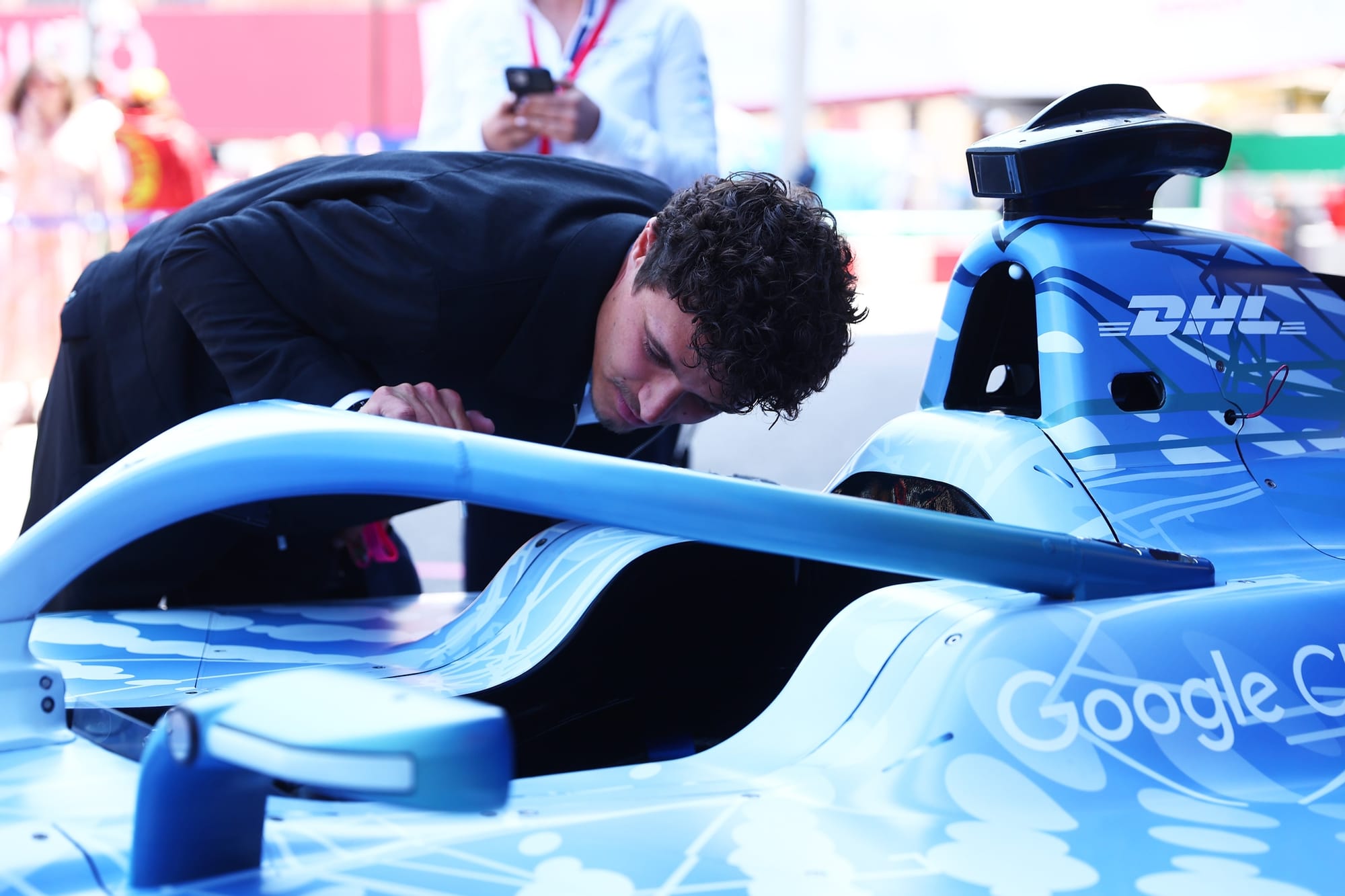
Formula E saw an opportunity to expand its reach and reflect off F1 world champion Lando Norris, as well as Nico Hulkenberg, Gabriel Bortoleto, and Carlos Sainz (and even Christian Horner). It did so garrulously, and it began to irritate a few people.
The reason Formula E was doing it was not only to catch the zeitgeisty, drive to survive-y slipstream of F1, one of sport's greatest success stories of recent decades, but also to ensure the Gen4 hype was turned up to 11 across the weekend.
Everyone seemed to be loving the glow. But a more perceptive question started to emerge on the whole orchestrated cabaret: were Formula E's stars getting elbowed into the shadows?
Pound for pound, Formula E is right up there with F1 in terms of driving talent. Strength in depth, it may even be stronger. That's open for debate, but ask engineers who have worked with both, and they are clear that Formula E drivers are generally on a par with at least the midfield group of F1.
Formula E does not push this anywhere near enough. And when it says that it doesn't like to be compared to F1 because it's so distinct, then why is it using F1 stars so extensively for promotion? Are its own drivers not good enough in terms of profile and star quality?
Perhaps a more extensive push in terms of endorsing and expanding profiles of its own drivers will come in Gen4, a ruleset that, ironically, Formula E is clearly touting for more F1 drivers to give Formula E a go.
Pretty much all of the F1 drivers will have informally been invited to try the Gen4 car this year. Maybe one or two will. But they are not the be-all and end-all for Formula E.
Formula E has developed its own talent pool that does remarkable things with very complex cars. But for every ex-F1 success story such as Buemi and Jean-Eric Vergne, there is a Felipe Massa or an Esteban Gutierrez.
An F1 driver coming to Formula E will need a lot of time to bed in and understand that one of the most demanding strands of international motorsport is not just a fun weekend away.