
The design rule Red Bull's exploiting with an unusual concept
 Originally published by The Race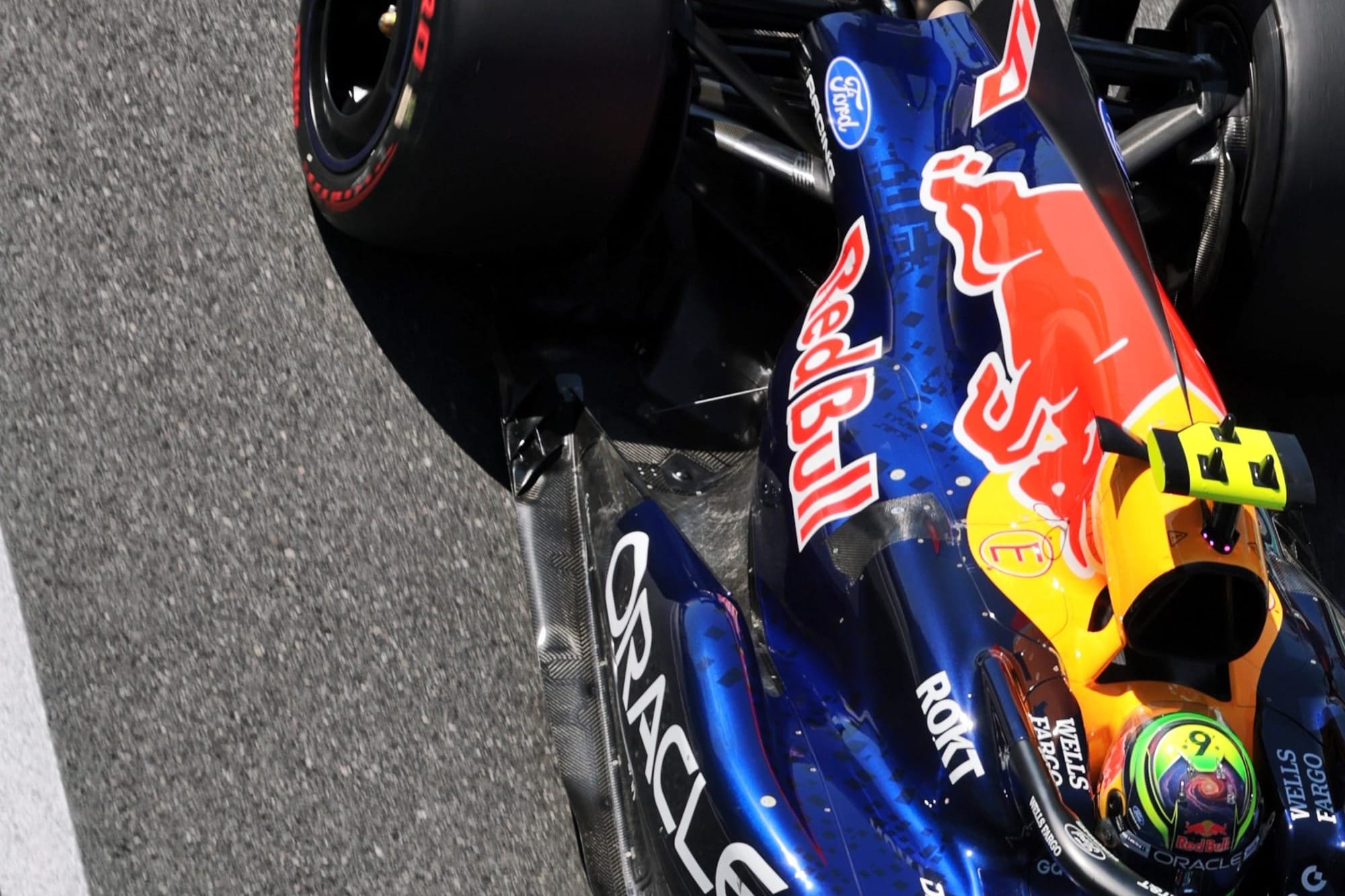
Red Bull's transformative Formula 1 car upgrade package features a "smart and innovative" design that exploits a concession in the rules considered legal for now.
F1's development race is in a fascinating early phase after the first major updates were revealed at the Miami Grand Prix, including three of the top four teams.
Red Bull was among those to bring various changes from the front of the car to the back, with striking visible changes - such as a large diveplane added to the front wing, and the rotation of the new rear wing into an upside-down position - the most immediately obvious at the time.
A comprehensive floor and bodywork overhaul with revised bib geometry, a new sidepod inlet and updated engine cover with a high-walled sidepod and wide 'waterslides' also meant a very clear shift in bodywork concept, though.
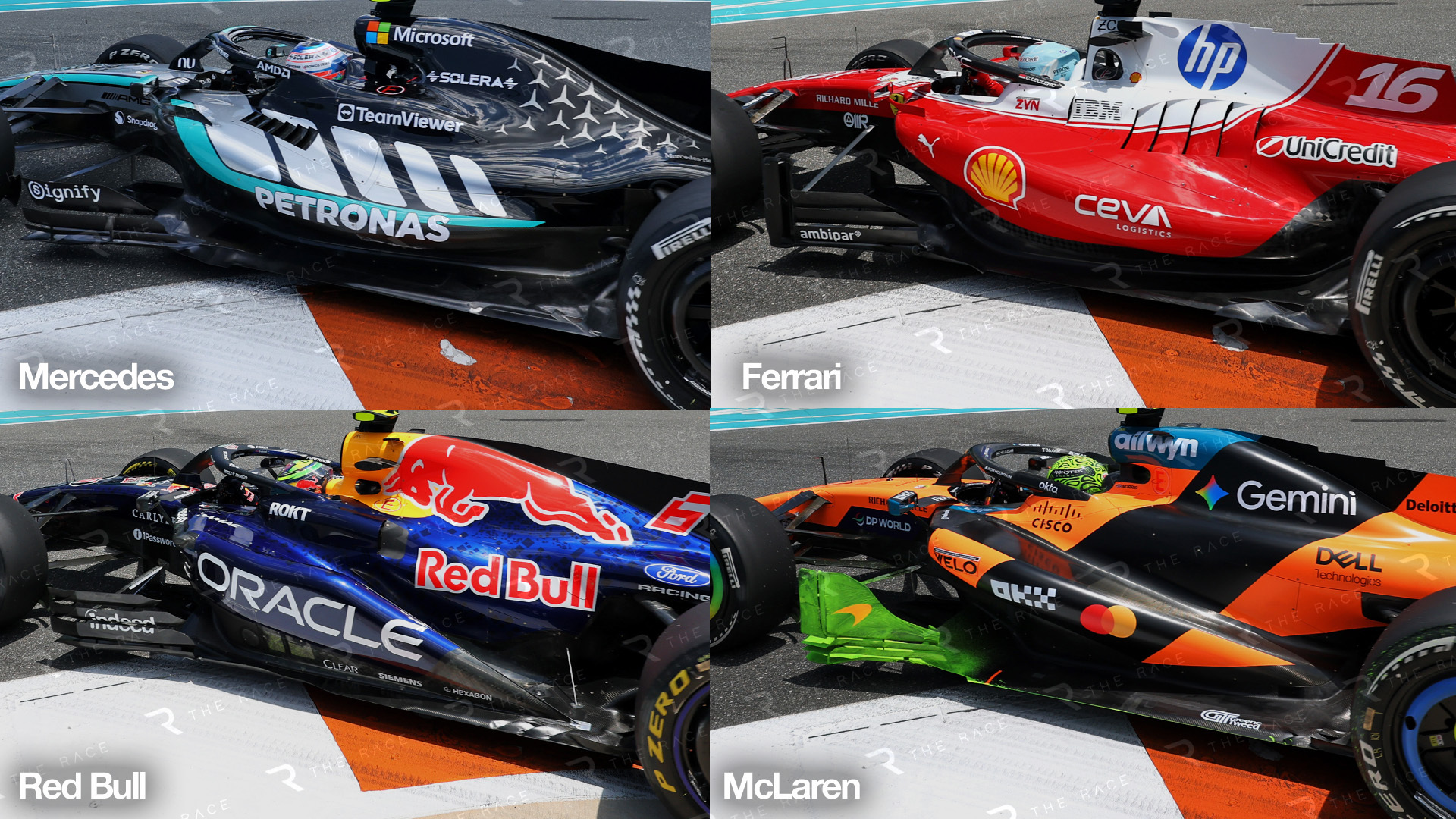
Ferrari and Mercedes have sidepod undercuts all the way along the car, with a gentle downwash shape and the floor fully exposed beneath.
McLaren's shape is closer to the new Red Bull design, featuring a sidepod that declines from front to back.
But it is one consistent shape, not as steep in its decline, and has a mostly flat top surface. The rear of the sidepod is also rounded off and joins the floor much more inboard - which is the key area of difference.
"If you see the sidepod concept that Red Bull introduced, that's quite different to the sidepod concept that for instance Mercedes, Ferrari have adopted," McLaren team principal Andrea Stella said when asked by The Race about the early technical trends and points of interest revealed by Miami's upgrade packages.
"And the McLaren style is further different. There will be a stabilisation at some stage, a convergence, but we look like we are quite far from this convergence.
"There will be a process of looking at each other, testing things. Certainly each team will be testing, taking a look at the Red Bull concept, to see the advantages.
"They've also been quite smart and innovative in the way they have used some legality concessions to introduce such geometry."
This is a reference to the Red Bull sidepod design itself not necessarily being the innovative part.
Waterslides were prominent on several cars in the ground-effect era, and the shape of the new RB22 bears some resemblance to the 2022 Alpine - as well as Red Bull's own work in 2024.
But it has now been able to take everything a step further because of a clever exploitation at the rear of the sidepod - or technically the floor, for this is where the legality concession comes in.
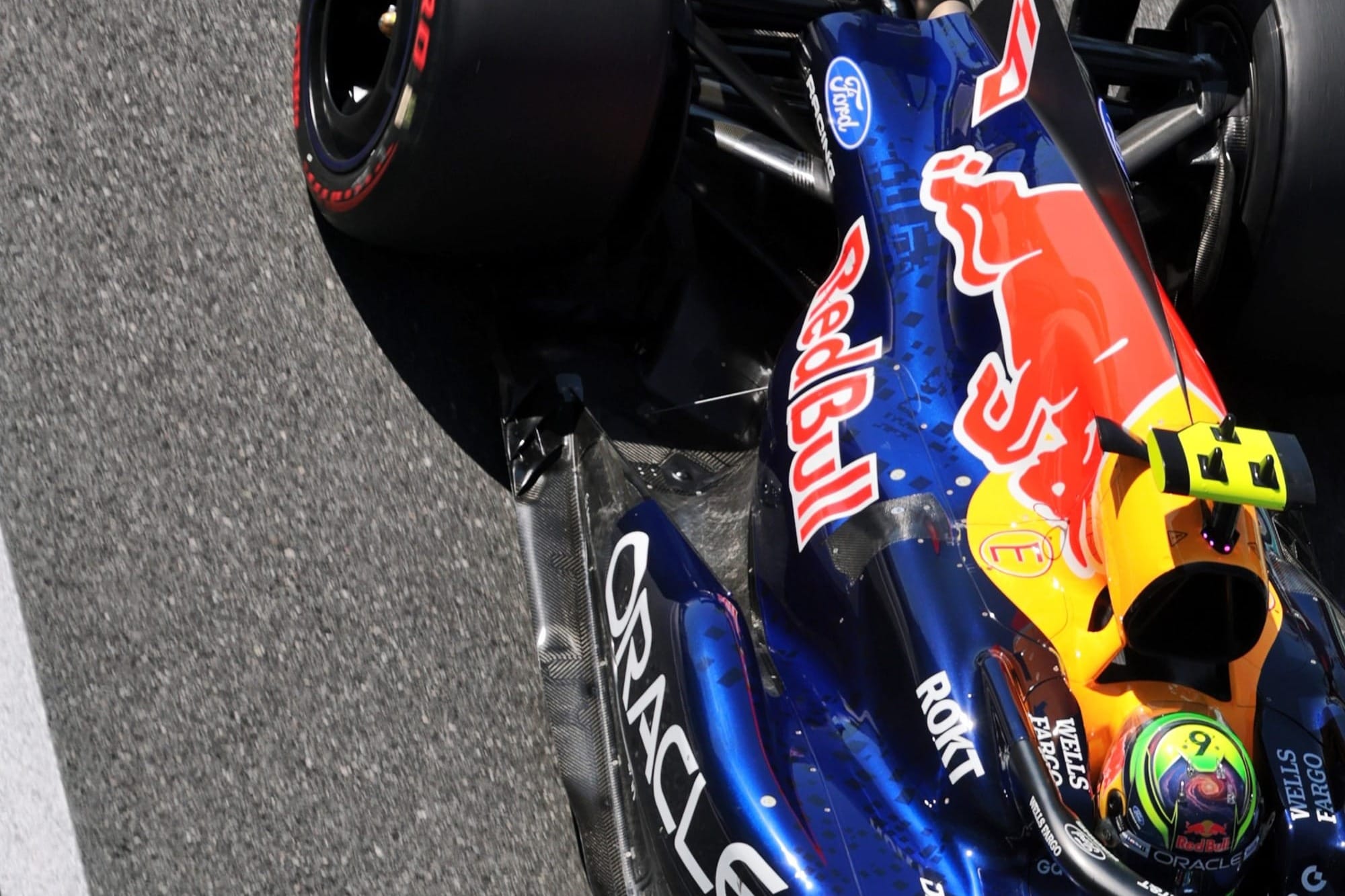
What has intrigued rivals is a sharp fence at the rear corner of the sidepod where it meets the floor, rather than a smooth curved transition.
This helps extend the outside of the sidepod further back, further outboard on the floor - which as Stella noted, completes a clearly unique overall design in this area.
And the shape here is not something other teams thought was possible.
The legal concession
The geometry Stella refers to relates specifically to how all those designs retain rounded edges.
F1 cars are split into various sections called reference volumes - or legality boxes - that impose different geometric demands. The front of the sidepod is governed by the ‘sidepod inlet’ reference volume but the back of the sidepod typically falls within the ‘engine cover’.
The regulations require certain radii that normally force this sidepod bodywork to be smoothly curved and continuous, preventing teams from creating sharp fins, discontinuous edges or multi-element structures in a given plane. They can’t curve inwards (concave radius) less than 50mm or outwards (convex radius) less than 75mm.
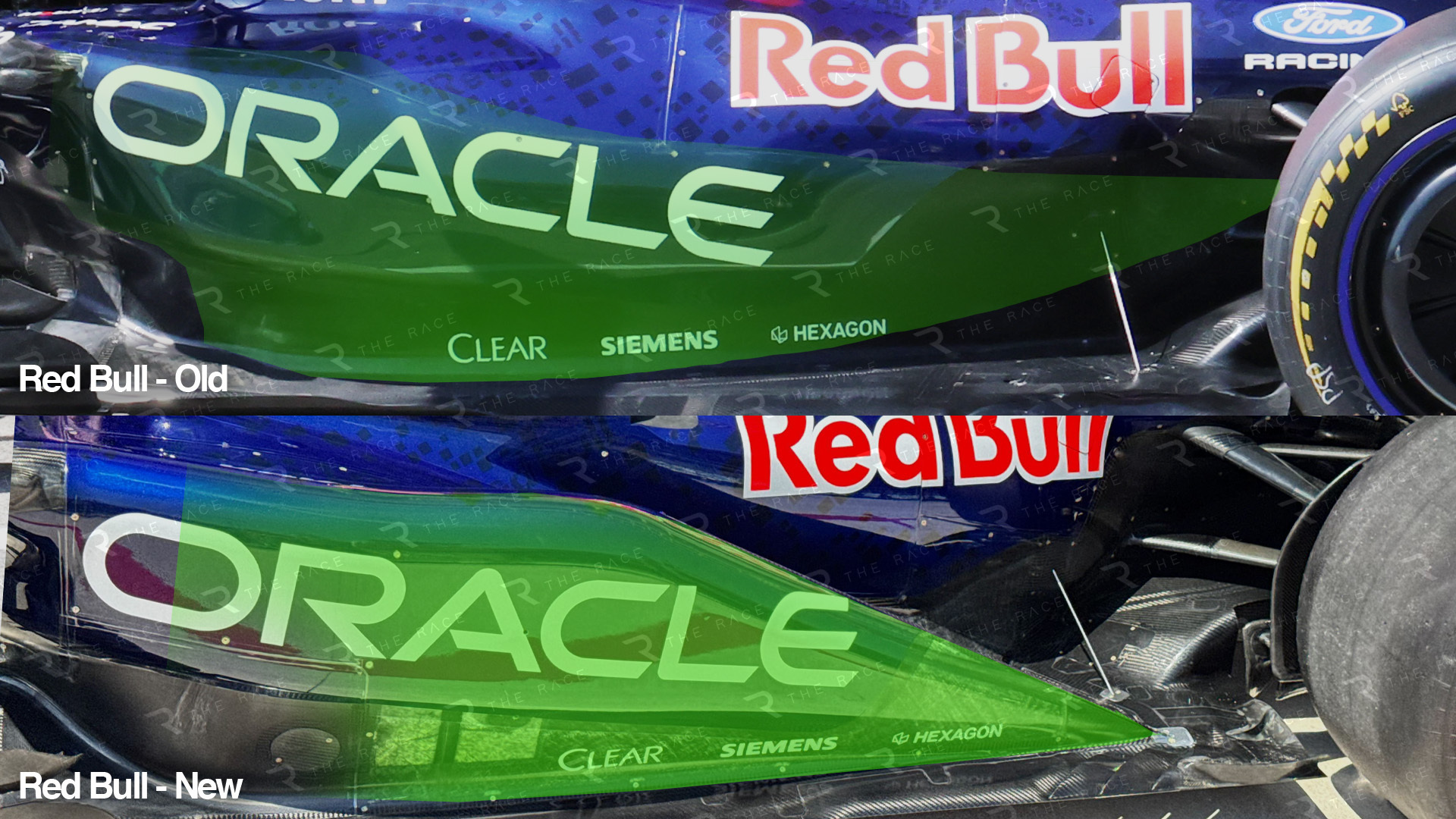
But the area where its sidepod meets the floor is part of the floor corner - where the rules do not enforce the same geometric limitation, and parts can be made up of multiple sections.
It had been theorised that where a part may straddle more than one reference volume, then the least restrictive demand applies, which gave Red Bull permission to create a shape that would not be allowed elsewhere on the sidepod.
However, The Race understands that the concession comes down to how the rules only define specific parts of car bodywork as "aerodynamic surfaces".
These are the surfaces that remain in contact with the external airstream after all trim and combination operations have been completed - and must be a rounded shape.
In this case, Red Bull has split its design in such a way that it is not considered a continuation of the sidepod/engine cover bodywork.
Instead it counts as a part in the floor corner with multiple sections that are joined together. And when two bodywork components are trimmed and combined, the surfaces at the internal boundaries where one component meets another are no longer in contact with the external airstream after assembly.
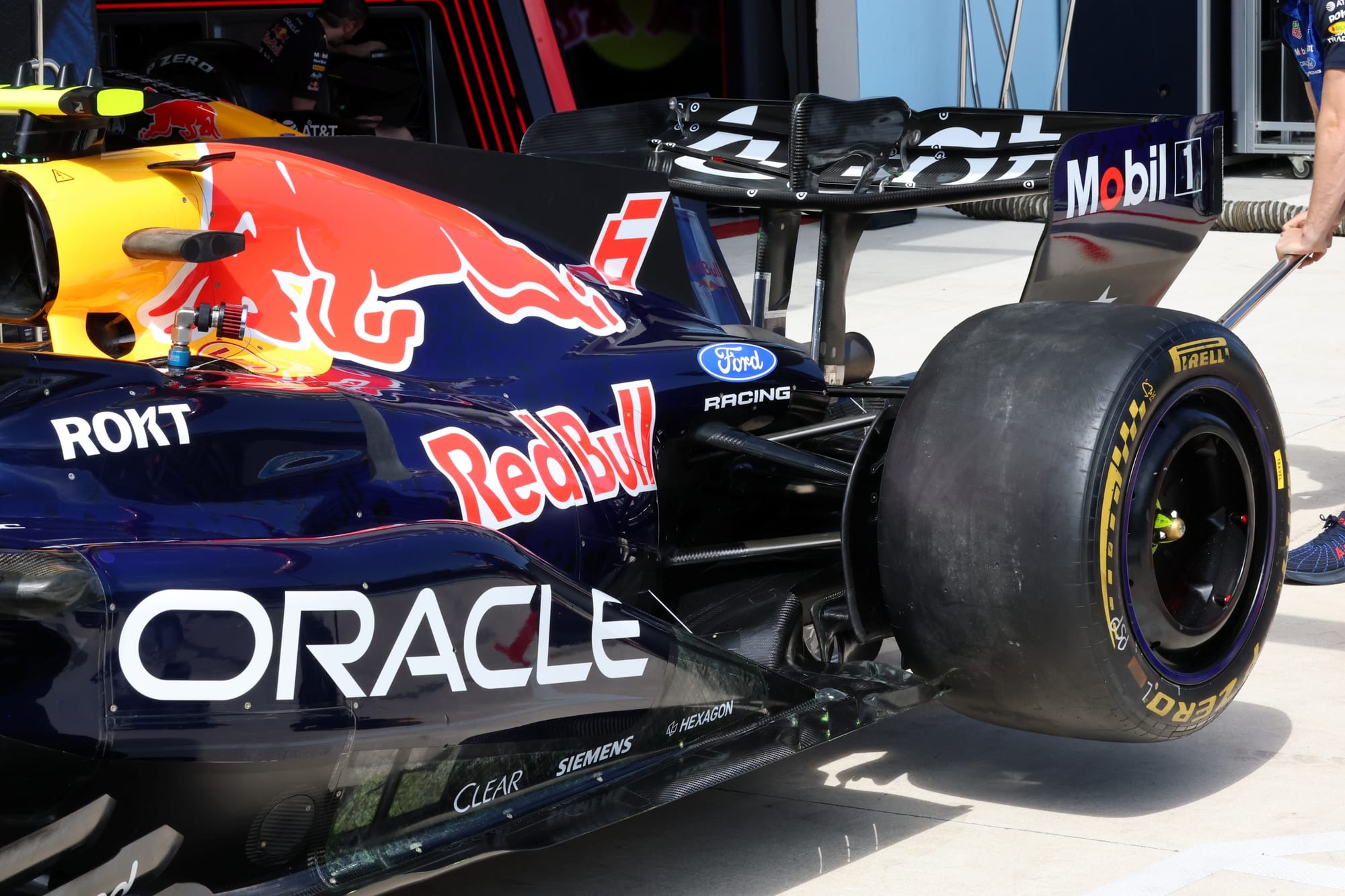
Essentially, the sharp edge is not a "surface" but a joint between two components being combined.
It therefore falls outside the regulatory definition of an aerodynamic surface and the minimum radius requirements do not apply.
Red Bull's design has been cleared by the FIA as a clever interpretation, and legal, but it goes against the intention of the regulations.
This means the FIA will monitor developments in this area, and assess whether its position and the wording of the rules need to be reviewed for 2027 and beyond.
A key factor will likely be whether this sparks a development war in this area in the pursuit of clear performance gains - which is what teams are now starting to explore after the Red Bull design broke cover.
What Red Bull's fixing
Stella said every team will now be studying this to understand the advantages, and the implication is it could become a big area of exploitation as this was not previously something thought possible.
What Red Bull is trying to achieve is exactly what McLaren and others are seeking to understand, especially as the positioning of the floor edge slots do not appear coincidental: they exist where the sharp back part of the sidepod meets the floor.
A theory for what Red Bull is pursuing here is that the sharp edge creates a well-defined vortex at the outboard rear corner of the floor, the slotted floor edge feeds energised air inboard of that vortex, and together they form a barrier that separates clean, managed underfloor airflow from the dirty, turbulent wake coming off the rear tyre contact patch.
Sealing the floor edge like this stops disruptive airflow raising the pressure underneath the floor, so it maximises downforce and makes it more robust - helping prevent potential 'stalls' that trigger sudden losses of downforce too.
Red Bull's car did not produce the expected rear downforce in its first iteration so the changes in Miami aimed to better support the rear, with its sidepod, bodywork and floor changes all about maintaining or improving downstream flow stability.
Therefore its new interpretation - or loophole, exploitation or whatever it should be called - fits perfectly with a target of keeping the underfloor airflow more strongly separated from the floor edge at the back and therefore less prone to detachments in certain situations.
Conceptually this is similar to what teams have done with floor fences and edge vortices in previous regulations. Now, Red Bull's interpretation uses extra geometric freedom to create a sharper, more forceful vortex-generating edge in that region than the smooth sidepod radius rules would otherwise permit.
And this all feeds off the back of the aggressive waterfall-style sidepod design, which pulls airflow aggressively inward and downward toward the rear of the car. The sidepod's high outer wall may also serve to keep turbulent airflow from the front wheel wake away from the cleaner flow that is being channelled internally.
Ultimately, though, the intricacies of the Red Bull concept front to back extend well beyond a single function - and a single shape. It is however an example of how teams are just scratching the surface of these new rules and how such small, specific areas of the car could suddenly become the next major battleground if there is potential for fruitful development.
"The overall design of the cars is far from converging," said Stella.
"With the 2025 cars, after a few years of the regulations, they started to look very similar to each other.
"I think we are still far from these conditions."