
Revealed: How F1 engine limits are actually more complex in Miami
 Originally published by The Race
The engine limits that will be enforced at the Miami Grand Prix mean electric power will be capped for almost one-third of the lap due to Formula 1’s new rules.
F1’s return in Miami after a month without racing will be the first event since stakeholders agreed to a sweeping set of regulatory changes around the 2026 energy management demands.
The main goals are to make qualifying more normal by reducing extreme battery charging techniques and reduce significant speed differentials by changing charging and deployment demands.
As the core constraint lies in the engine architecture and the near-50/50 split between internal combustion engine and electric power, which is not being changed in-season, the rulemakers have had to find other ways to contain what teams do to optimise their energy deployment.
F1's divisive 2026 engines are governed by complex energy and power limit rules at races that determine how much the battery can be charged and deployed and how the MGU-K can be used.
This has become even more complicated – with the power and energy limits for Miami, published on Thursday, shown below – as a result of efforts to simplify the final product.
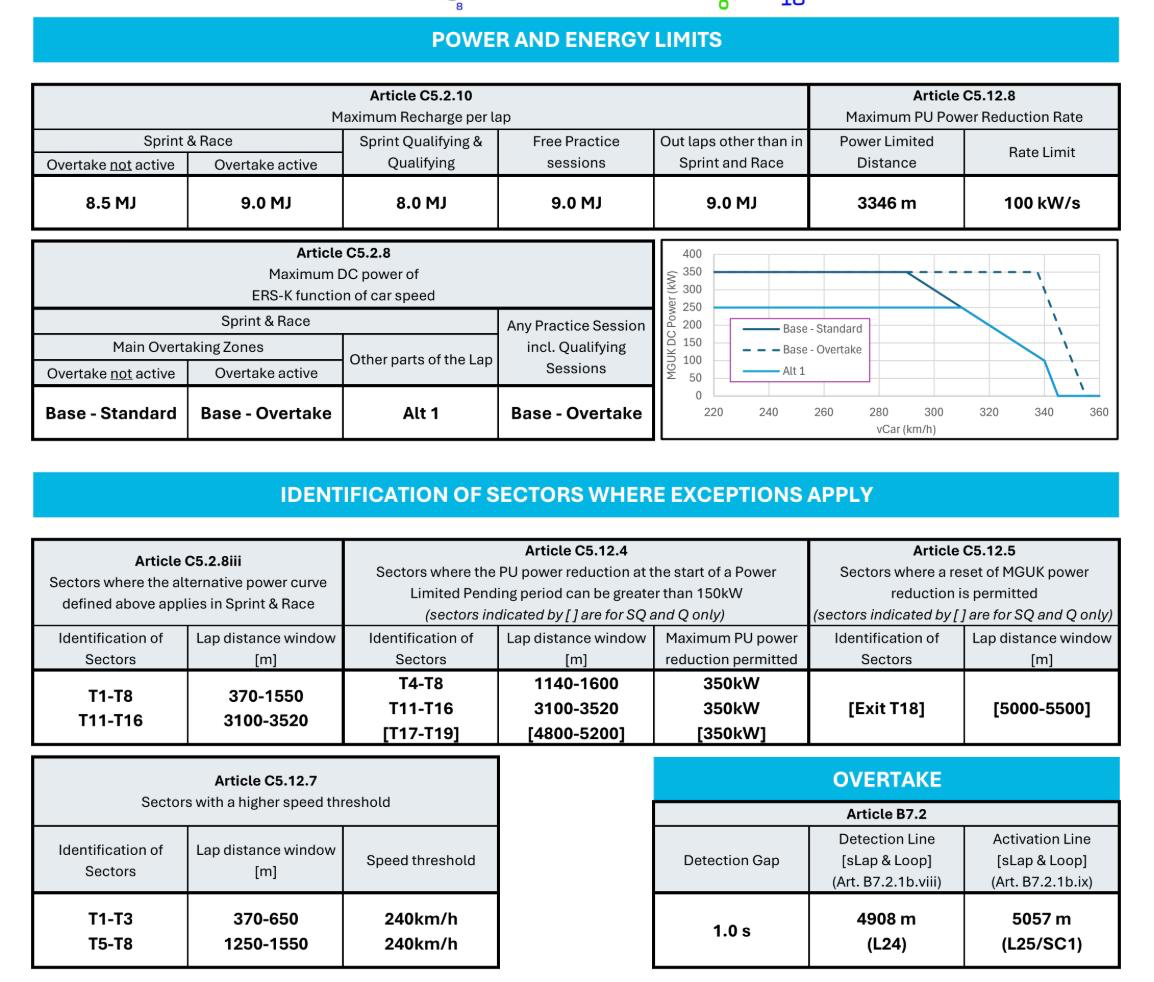
The headline item is reducing the harvesting limit in qualifying, so that a bigger proportion of how the battery is charged on a qualifying lap is just in normal braking conditions.
This is track-specific though, and Miami is an energy-rich circuit, which means plenty of opportunities to charge the battery ‘normally’.
So, while the rules now permit a 7MJ harvesting limit, it will be 8MJ in qualifying in Miami – the same as the last race in Japan.
Another new restriction in the races, though, imposes a 250kW power limit in certain sections of the track instead of the MGU-K’s potential 350kW maximum on the engines.
Given the amount of energy available from these batteries is insufficient to run the MGU-K at its full potential all the way around a lap, teams previously had to choose where to deploy electric power and where not anyway.
Now, though, that choice is being taken away as the maximum power is being capped in certain sections – which, in Miami, adds up to almost one third of the lap.
Turns 1-8 and Turns 11-16 will be governed by the power cap, which means most of the first sector from Turn 1 onwards and the rest of sector two.
These sections are split by the snaking straight from Turn 8 to Turn 11, where full power will be allowed – as it will in the final sector.
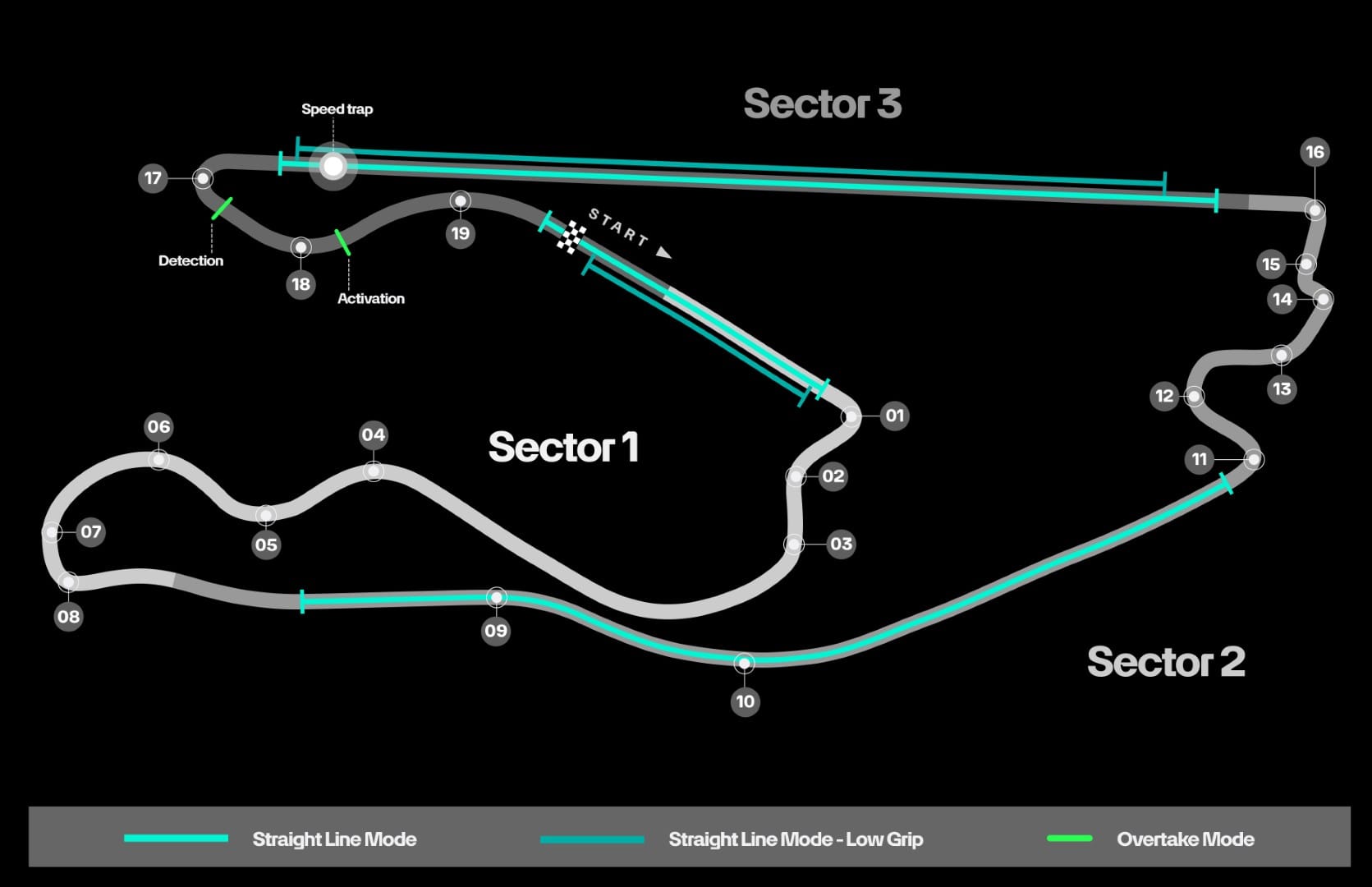
Another track-specific demand in Miami is that in the sweeps in the first sector – Turns 1-3 and Turns 5-8 – there will be a higher speed threshold that must be reached before the MGU-K power can be cut.
Usually, MGU-K power must be gradually reduced in stages unless the car is going slower than 210km/h. As cornering speeds in those specific areas in Miami will likely fluctuate around that speed, the threshold has been increased to 240km/h to avoid potentially inconsistent electrical energy deployment.
This – along with other pre-existing limits on where the MGU-K deployment can be shut off immediately, and an effective double hit of the staged power rampdown is permitted – are further markers of how complex the rules governing engine usage are at the moment.
“The issue is, it creates such a complication on certain scenarios, that there's almost unintended consequences,” Haas team boss Ayao Komatsu said of the rules on Thursday in Miami.
“So in the long run, maybe it’s too simplistic to say, but we have to really be simplifying the regulations.
“It's very difficult to make a big change in mid-season. So in season, I think we just have to be careful tackling the issue with relatively minor changes.
“But [we need to] try not to add more complications – because we definitely shouldn't be adding more complications.”