
Honda reveals first Aston Martin Sakura testing amid vibration concerns
 Originally published by PlanetF1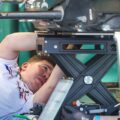
Honda trackside general manager and chief engineer, Shintaro Orihara, revealed the power unit marque was able to keep an Aston Martin chassis for testing at its Sakura base for the first time.
Work has been ongoing between the two companies to look to iron out early issues with integrating Honda’s 2026 power unit with the AMR26 chassis, which has resulted in vibration issues across the first three rounds of the season.
Shintaro Orihara confirms AMR26 Sakura test to help tackle vibration issues
Want more PlanetF1.com coverage? Add us as a preferred source on Google to your favourites list for news you can trust
Fernando Alonso had explained that the level of vibration behind the steering wheel was such that his hands would be left a “little bit numb” after just 25 minutes, but despite these early issues, added separately that “huge potential” remains within Aston Martin this season.
The Silverstone-based team secured its first race finish of the season at Honda’s home race at Suzuka last time out, with Alonso crossing the line 18th.
After the race, its factory power unit manufacturer brought an AMR26 back to its factory for further static testing, which also provided further opportunities for hands-on work to look to make progress on the package.
While Orihara stressed a “visible impact” on power unit performance may not be seen in Miami this weekend, tempering expectations of “big jumps forward”, the work behind the scenes in this extended period between races has been fruitful in putting further steps in place to look to reduce vibration.
“It has been a long but intense period between the races with lots of work happening in collaboration with the Aston Martin Aramco Formula One Team both in Japan and in the UK,” Orihara said ahead of the Miami Grand Prix.
“The Japanese Grand Prix showed that the work is going in the right direction and helped us to find the motivation to keep pushing forward.
“After that race, we took the opportunity to keep one of the AMR26 cars on site for further static testing in Sakura for the first time, focusing our efforts on reducing the vibrations and thus increasing reliability.
More as Honda and Aston Martin look to solve teething issues
Honda ‘enhancing’ Aston Martin ‘countermeasures’ in latest progress update
Honda admits Aston Martin AMR26 worsens engine vibration issues
“We have made some progress, allowing us to implement further countermeasures in Miami and later in the season. Realistically, this progress will not have a visible impact on the power unit performance on track, so we shouldn’t be expecting big jumps forward here.”
With Miami holding the next Sprint weekend of the season, the weekend will be condensed in terms of free practice running.
However, with rule tweaks set to come into force and significant upgrades set to be brought up and down the grid after the cancellation of both the Bahrain and Saudi Arabian Grands Prix, it was unanimously agreed that FP1 would have a 30-minute extension to make up some of the shortfall.
With several different factors coming into play, Honda’s chief engineer explained how the power unit will best need to be utilised, with limited time available for setup.
“Miami is the first circuit on the 2026 calendar with lots of slow speed corners,” Orihara said.
“It is a unique track, having two long open-throttle sections, and several slow speed corners. This combination makes it interesting to find the car setting compromise.
“On the power unit side, it’s about improving driveability through the slow speed sector and optimising energy management in this section is a key factor to maximise performance.
“Miami is also the first warm race weekend of the season so it’s paramount to keep the power unit temperatures under control under these new regulations.
“The Miami Grand Prix is a Sprint weekend which means we only have one practice session – albeit 90 minutes – to optimise all of the data settings under the new regulations and define the best cooling specifications ahead of Sprint qualifying, which makes FP1 here very important.”
Want to be the first to know exclusive information from the F1 paddock? Join our broadcast channel on WhatsApp to get the scoop on the latest developments from our team of accredited journalists.
You can also subscribe to the PlanetF1 YouTube channel for exclusive features, hear from our paddock journalists with stories from the heart of Formula 1 and much more!
Read next: Martin Brundle predicts F1 2026 ‘relaunch’ with ‘dramatically changed’ cars