
NLS explained: History, classes, Max Verstappen involvement and more
 Originally published by PlanetF1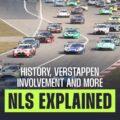
The Nürburgring Langstrecken-Serie [‘Nürburgring Long Distance Series’], commonly shortened to NLS, is an annual series of endurance races held around the Nürburgring Nordschleife.
With a multitude of classes and drivers ranging from amateurs to professionals, the series celebrates its 50th year in 2026, with a 10-race calendar put in place for the occasion.
How did the Nürburgring Langstrecken-Serie begin?
Want more PlanetF1.com coverage? Add us as a preferred source on Google to your favourites list for news you can trust.
The NLS in its earliest form begun in 1977 by a collective of different motorsport clubs in Germany, which were either members of European motoring organisation ADAC, or the German Motor Sport Federation [DMV].
As these clubs were each holding their own individual race at the Nürburgring, it was decided the clubs would unify to race under the same rules and create a championship calendar, with each club hosting a round of the season each. Importantly, while the ‘Nürburgring 24 Hour Qualifiers’ are held as part of the schedule, the 24-hour race itself sits separately from this championship.
While most of the races are four hours long, one round of the year is held over six hours, the 6h ADAC Ruhr-Pokal-Rennen [6h Ruhr Cup Race], which is held up as the marquee event of the NLS season.
Having begun as the Langstreckenpokal Nürburgring [‘Nürburgring Long Distance Cup], the name has changed several times to reflect different sponsorships and its recognition as the endurance racing championship of Germany, before switching to its current name in 2020.
Ahead of its 50th season in 2026, managing director Mike Jäger said of the series: “Over the past 49 years, the NLS has established itself as a fixture in international motorsport.
“I can’t think of any other series with a longer history, apart from Formula 1 and NASCAR.
“Founded in 1977 by enthusiastic motorsport clubs, it has retained its authenticity despite constant development and professionalisation.”
More motorsport explained from PlanetF1.com
Motorsport Triple Crown explained: Its prestigious races, history and only winner
F1 jargon decoded: Breaking down what key Formula 1 words mean
When and why did Max Verstappen begin to take part?
The series gained a new high-profile arrival when four-time Formula 1 World Champion, Max Verstappen, entered into the NLS8 event in 2025, as part of his endurance racing efforts away from F1.
Having founded his own GT3 team, Verstappen Racing, the Dutchman has been looking to expand his racing horizons, and his love of the GT3 category is evidence of that.
The Deutscher Motor Sport Bund [DMSB] licence is also known colloquially as the ”Ring Licence’, and it is a specific requirement for drivers to race on the 15.7-mile circuit, owing to its unique nature.
In late 2025, Verstappen headed to the circuit off the back of victory in the Italian Grand Prix to race a de-tuned Porsche Cayman GT4 car, in order to gain the licence needed to return to the circuit in future.
Having achieved his licence requirements, the multiple Formula 1 champion returned for NLS9 a fortnight later, entering into the top SP-9 class with Emil Frey Racing.
“My passion is to also do these kind of races,” Verstappen said at Formula 1’s following round in Azerbaijan.
“I knew that taking my licence needed to be done in a certain way and I have to say that they were all very helpful and supportive when I got there. But rules are rules and I get that.
“At the end of the day it doesn’t matter what kind of car you drive around the Nordschleife, it’s always going to be fun when you push it.”
Ultimately, Verstappen’s aim has been to enter into the Nürburgring 24 Hours, with further entries in NLS4 and NLS5 having taken place in 2025 before his tilt at racing in the blue riband endurance event.
What are the classes and which is fastest?
Like other endurance series, different car classes are categorised by car classification, and can be subsequently broken down into Pro [professional], Pro-Am [professional-amateur] and Am [amateur] sub-classes, based on driver classification.
In NLS racing, the SP-9 class is the category for FIA-homologated GT3 cars, and is the fastest category for overall victory.
SP-10 is for FIA-homologated GT4 machinery, and separate SP classes from 3-8 exist for purpose-built racing cars, sub-divided by engine capacity.
Different classes exist based on certain BMW car models, while Cup 2 and Cup 3 exist for identical Porsche 992 GT3 and Porsche Cayman GT4 Trophy cars respectively.
AT class cars are powered using alternative fuels, while V cars are production cars brought to the circuit, categorised from V3 to V6 based on engine capacity.
SPT and VT cars are similar their SP and V counterparts, the difference being they carry turbocharged engines.
What is the 2026 NLS calendar?
The NLS season is already well underway in 2026. Here is a look at the full calendar, with all races being four hours unless stated:
14th March – NLS1: ADAC Westfalenfahrt [‘Westphalia Tour’]
21st March – NLS2: ADAC Barbarossapreis [‘Barbarossa Prize’]
11th April – NLS3: Adenauer ADAC Rundstrecken-Trophy [‘Circuit Trophy’]
18th and 19th April – ADAC 24-Hour Qualifiers [also NLS4 and NLS5]
16th-17th May – Nürburgring 24 Hours
20th June – NLS6: ADAC Eifel Trophy
1st August – NLS7: 6h ADAC Ruhr-Pokal-Rennen [‘6h Ruhr Cup Race’]
12th September – NLS8: ADAC Reinoldus-Langstreckenrennen [‘Reinoldus Endurance Race’]
13th September – NLS9: ADAC Barbarossapreis [‘Barbarossa Prize’]
10th October – NLS10: NLS Sportwarte-Trophy [‘Sports Officer Trophy’]
Want to be the first to know exclusive information from the F1 paddock? Join our broadcast channel on WhatsApp to get the scoop on the latest developments from our team of accredited journalists.
You can also subscribe to the PlanetF1 YouTube channel for exclusive features, hear from our paddock journalists with stories from the heart of Formula 1 and much more!
Read next: Explained: F1’s complex power unit upgrade system from 2026 onwards