
F1 drivers deliver blunt rules change verdict: ‘Get rid of the battery’
 Originally published by Motorsportweek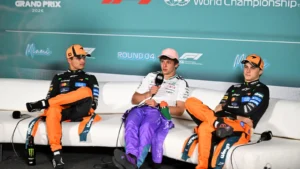
The top three finishers of the Formula 1 Miami Grand Prix have confirmed that the changes to the 2026 technical regulations have had little impact on the sport’s power unit issues.
The Miami GP saw the debut of the FIA “enhancements” to the technical regulations, following high level talks between the power unit manufacturers, teams and drivers.
Designed to curb superclipping and excessive closing speeds caused by running different engine modes, the hope was cars could also run at full throttle and complete overtakes without “yo-yoing”.
But top three Kimi Antonelli, Lando Norris and Oscar Piastri’s feedback in the press conference indicated that more needed to be done on tackling the issues surrounding the power units.
Responding to a question from Motorsport Week on the impact of the changes to the regulations, the top three were unanimous in their verdict.
F1 Miami GP driver verdict: “not much has really changed”
Piastri confirmed that although the enhancements resulted in a small improvement to energy management issues impacting qualifying, excessive closing speeds and deployment issues in the race are still a major problem.
“I think reducing the harvest limit in qualifying has helped a bit,” he said. ” It’s not fixed the problem or all the problems, but it’s helping with one
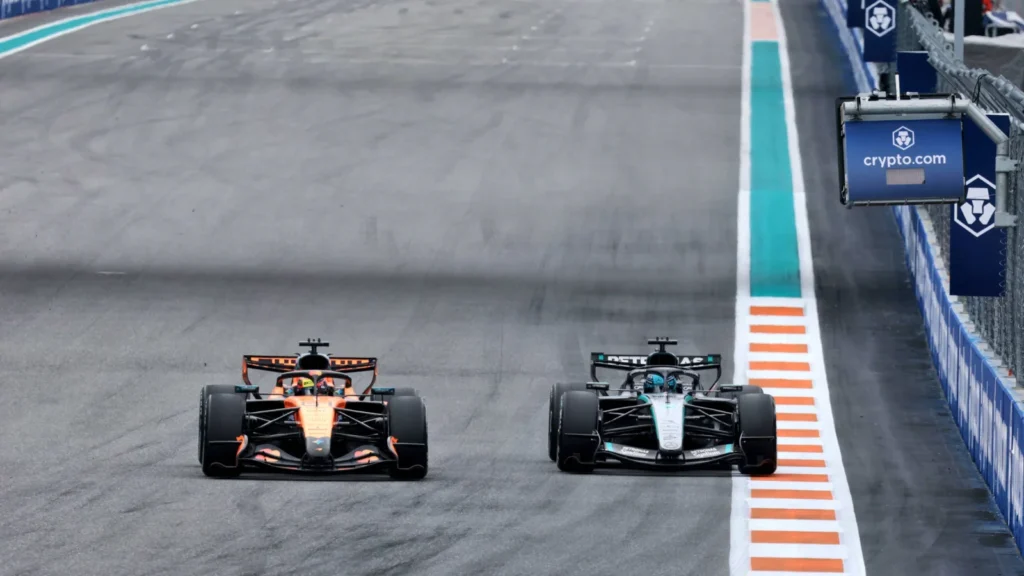
“The races are basically exactly the same and I think today was my first proper experience of overtaking people and having to defend and stuff like that. It’s pretty crazy, to be honest. At one point, I could see my dash George was one second behind me and managed to overtake me by the end of that straight.It’s just a bit random.
” All the closing speeds are huge and trying to anticipate that as defending driver is incredibly tough to do. Obviously, for the overtaking driver, I wasn’t that pleased with one of the moves that George did, but I found myself almost doing the same move about five laps later just because the closing speed is enormous.
Piastri called for more changes, but questioned the timeline in which further enhancements could be introduced.
“From that side of things, not much has really changed. I think the collaboration again from the FIA and F1 has been good, but there’s only so many things you can change with the hardware we have. Some changes in the future are, I think, still needed for sure.How quickly we can do it is the big question.”
Antonelli concurred with Piastri, believing it to be “a small step in the right direction”, but raised concerns over closing speeds.
“I mean, not a lot to add, as you said, qualifying feels better, more natural” he remarked.
“The race is still this close in speed. As I said, it’s massive. You also need to trust the guy who is defending because also with this active aero, the car is pretty lazy when you want to change direction.You need to think in advance. As I said, you need to trust as well the driver who is defending. It was a small step in the right direction.Let’s see what is going to happen next.
Norris delivered a blunt verdict, bemoaning the inability of the car to run at full throttle, before suggesting his own radical solution.
“I think they covered it well,” he said. It’s a small step in the right direction, but it’s not to the level that Formula One should still be at yet.
“I think we said yesterday, still in qualifying, if you go flat out everywhere and you’re trying to push like you were in previous years, you still just get penalised for it. You still can’t be flat out everywhere.
“It’s not about being as early on throttle everywhere.You should never get penalised for that kind of thing and you still do. Honestly, I don’t really think you can fix that. You just have to get rid of the battery.
“Hopefully, in a few years, that’s the case.”
The characteristics of the Miami International Autodrome meant this weekend was never going to be a true indicator of progress, given that it is an energy-efficient circuit.
But the feedback from the top three in Miami already shows the battle to strike the right balance on these cars remains.