
Toto Wolff implores Oliver Bearman crash rethink with ‘baseball bat’ changes to F1 regulations
 Originally published by Motorsportweek
Toto Wolff has urged Formula 1 to take Oliver Bearman’s freak 50G crash at the Japanese Grand Prix “for what it was” rather than a catalyst for extortionate rule changes.
F1’s latest era hasn’t started on the most harmonious of notes.
Debate has been rife, amongst drivers, fans and teams alike with respect to the implications of the latest technical rule-set.
Safety has propped up as the prime topic of discussion, however, only exacerbated by Bearman’s horror 50G shunt at the Suzuka International Circuit, last month.
The Haas driver was on Franco Colapinto’s tail – heading into the Spoon Curve – with the former having activated the boost button and the latter recharging.
The massive closing speeds, a common occurrence under the 2026 regulations reset, saw Bearman having to take swift evading action that eventually sent him plummeting towards the barriers.
The massive hue and cry post this incident has forced the FIA and F1’s hand, and has now revealed a series of major “refinements” ahead of next weekend’s Miami Grand Prix.
But prior to the announcement, Wolff spoke of his fears of a political result; a potential blowing out of proportion in other words that could essentially destroy the very ethos of the current regulations.
Hence, the Mercedes boss has urged the sport to err on the side of caution, employ reason, and take Bearman’s incident for simply “what it was”.
“We need to see the Bearman accident for what it was, and it was a misjudgment of a situation,” he told media including Motorsport Week.
“It’s like pushing the boost button; it’s like not braking on a kink where you supposedly should brake.”
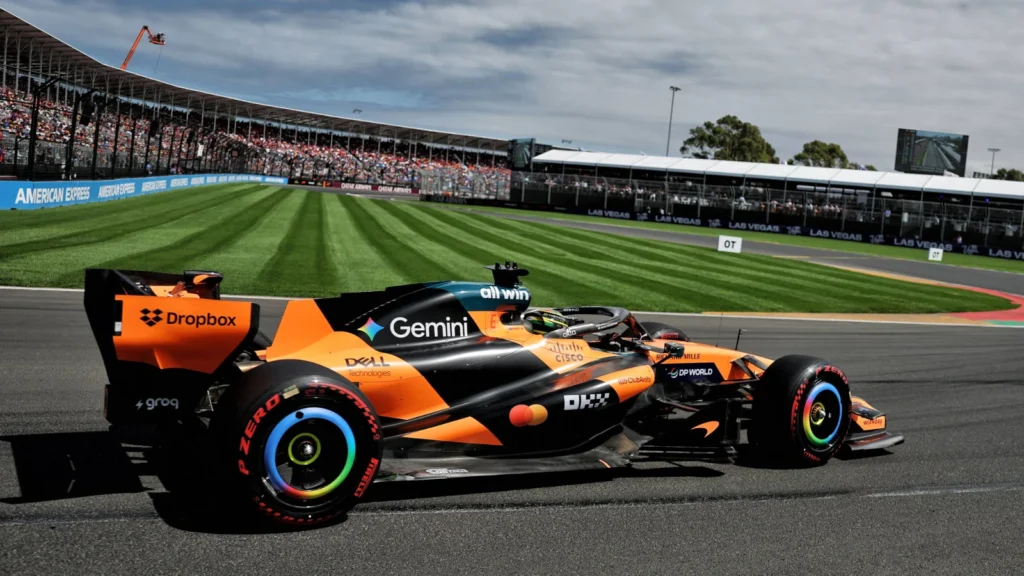
Toto Wolff warns F1 to “act with a scalpel not a baseball bat”
Wolff’s concerns with respect to any potential rule change is grounded in the reality of the colloquial ‘Piranha Club’.
The Austrian is of the strong opinion that stakeholders involved in the decision making process might prioritise rule changes to suit their respective teams rather than the overarching fabric of the sport.
Ferrari, notably, were the staunchest opponents to the much discussed start procedure overhaul, having flagged the issue earlier and developed its power unit in accordance with the current ruleset when its cries fell on deaf ears at the FIA.
But conceding to the inherent risks involved in motorsport, Wolff urged a concerted and unbiased approach to tweaking the rules to “improve the product” and not misuse the “responsibility” and “opportunity” the sport has afforded.
“We all share the same objectives,” Wolff asserted. “It’s how can we improve the product, make it out and out racing, and look at what can improve in terms of safety, but act with a scalpel and not with a baseball bat.
“Will it be always the safest spot? It won’t. It’s about understanding what those systems do to the car, how we can reduce the risks in particular situations like in the rain or whatever, but always reminding ourselves we are guardians of the sport.
“We have responsibility for the sport and the opportunity it has given to all of us, rather than looking at the personal advantage or disadvantage of certain regulations being changed or not.”
F1 rule critics asked to observe endurance and GT racing
Wolff doubled down on his stance to not completely morph the current regulations. He cited Le Mans and the recent WEC race at Imola.
The Austrian contended that the inherent criticisms of the current F1 rules are not outliers in terms of other categories of racing, they are just better managed and packaged into the on-track spectacle.
“There’s plenty of brilliant racing happening in the world that we as racers love,” he explained.
“I love Le Mans. I am sitting overnight watching the timing screen, but the hyper cars go through the Porsche Curves 30 or 40 kilometers faster than the GTC cars. The speed differences are enormous.
“And even the best racers in Formula 1 in our world love that sport with all the dangers it brings with it. When you look at WEC in Imola this weekend, the lap time differences between the prototypes and the GT cars were more than 10 seconds.”
Whether the sport – depending on opinion – has indeed taken a scalpel or a baseball bat to the current regulations will definitely be up for debate.
That said, the one thing that cannot be disputed, however, is that both, the FIA and F1 have indeed taken more urgent cognisance of the prevailing opinions and suggestions from all the stakeholders of the sport.
READ MORE – Toto Wolff dubs Mercedes ‘heroes’ of F1 2026 amid competition concerns